Comparing Insulation Materials for Polish Buildings
An independent overview of the most widely used thermal insulation types — their conductivity values, practical applications, and performance in Poland's climate conditions.
Why It Matters
Thermal Regulations in Poland
Since 2021, Polish building regulations (Warunki Techniczne, WT 2021) require external walls of new buildings to achieve a maximum heat transfer coefficient of U ≤ 0.20 W/(m²·K). Meeting this standard requires selecting insulation with appropriate thickness and conductivity for local climate conditions.
| Material | λ [W/(m·K)] | Common Use | Fire Class |
|---|---|---|---|
| Mineral wool (stone) | 0.033 – 0.040 | External walls, roofs, attics | A1 — non-combustible |
| Mineral wool (glass) | 0.030 – 0.044 | Pitched roofs, partitions | A1 — non-combustible |
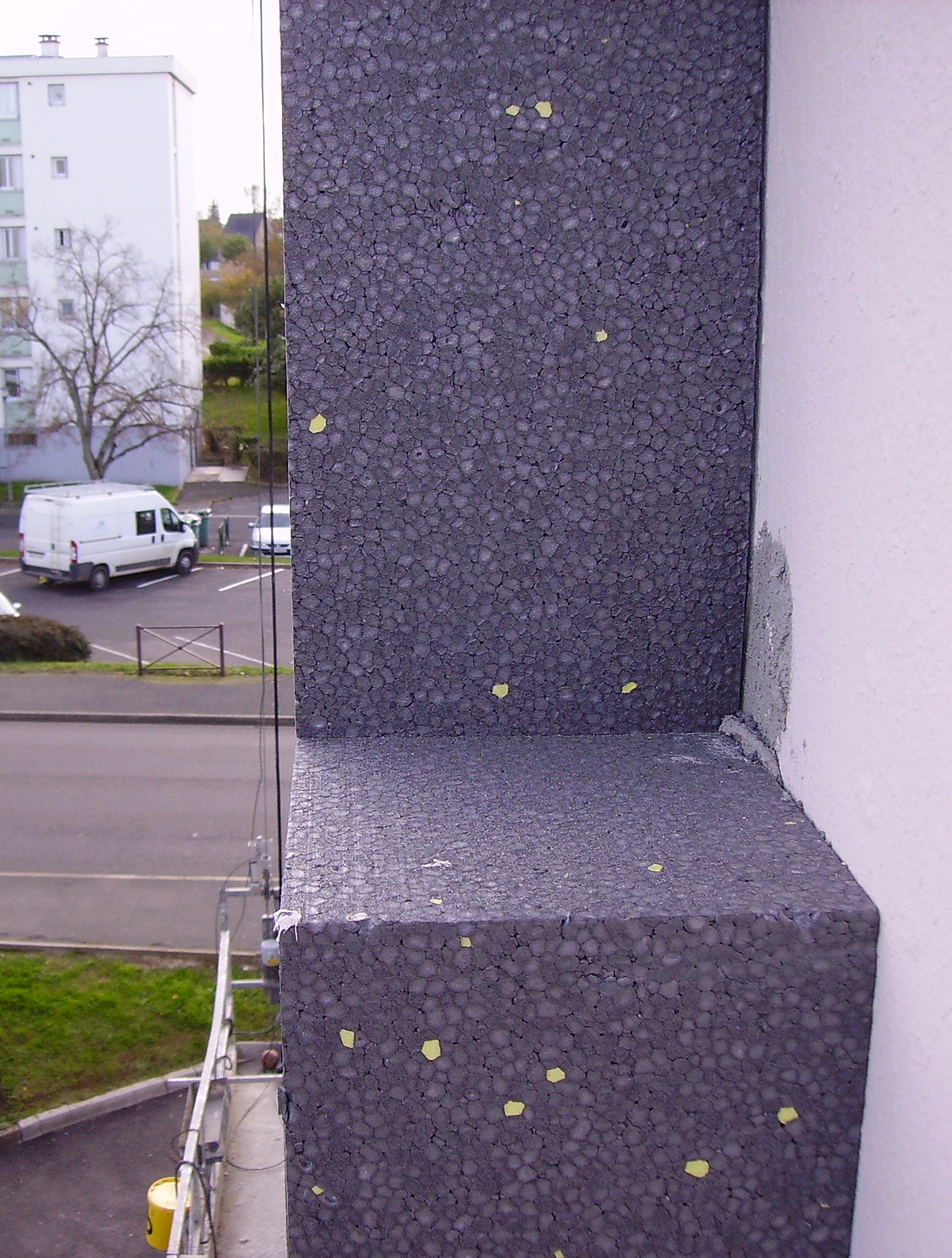
| EPS (standard) | 0.036 – 0.042 | ETICS facade systems, floors | E (self-extinguishing) |
| EPS graphite | 0.031 – 0.033 | ETICS, tight spaces | E (self-extinguishing) |
| XPS | 0.030 – 0.036 | Flat roofs, ground floor, basement | E (self-extinguishing) |
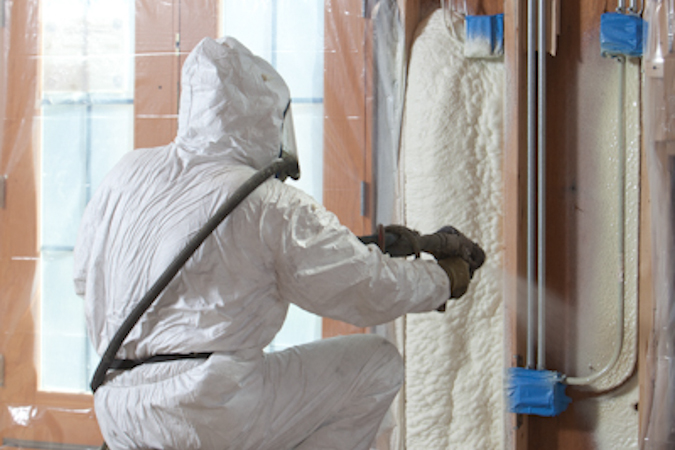
| Spray PU foam (closed-cell) | 0.022 – 0.028 | Attics, irregular structures, pipes | B2 – D (treated) |
| PU rigid boards | 0.022 – 0.026 | Flat roofs, commercial facades | B2 – C (faced boards) |
In-Depth Articles
Insulation by Material Type
Mineral Wool in Polish Buildings: Properties and Installation Contexts
Glass wool and stone wool remain the most commonly specified insulation materials in Poland for both new construction and retrofitting. This overview covers their conductivity values, fire classification, acoustic properties, and typical installation configurations in the Polish construction context.

EPS vs XPS: Selecting the Right Polystyrene for Different Building Applications
Expanded (EPS) and extruded (XPS) polystyrene boards are both widely used in Poland, yet they perform differently depending on moisture exposure, load-bearing requirements, and position in the building envelope. This article explains when each is appropriate.

Spray Polyurethane Foam: Thermal Properties and Practical Considerations
Closed-cell spray polyurethane foam achieves the lowest thermal conductivity among commonly available insulation materials. This article covers its properties, application methods, performance in Polish climate conditions, and the practical constraints affecting its use.
Key Factors
What Determines Insulation Performance
Material conductivity is only one part of the picture. Actual thermal performance in a building depends on installation quality, moisture management, and compatibility with the building structure.
Thermal Conductivity
λ Value
The lower the declared thermal conductivity (λD), the thinner the layer needed to achieve a given resistance. Values are measured at 10°C and declared by manufacturers according to EN 13162–13171 standards.
Moisture Resistance
Hygrothermal Behaviour
Some materials, such as XPS and closed-cell PU foam, are inherently moisture-resistant. Others, like glass wool, require careful vapour barrier detailing to avoid water absorption that would reduce their declared thermal resistance.
Installation
Thermal Bridges
Even correctly specified insulation can underperform if installation creates discontinuities. Fixings, window reveals, and structural elements require detailing to minimise linear thermal transmittance (ψ values).
Poland's Climate
Local Conditions and Design Temperatures
Poland sits in a temperate continental climate zone with significant regional variation. Design outdoor temperatures and heating degree days vary considerably between Warsaw and mountain areas such as Zakopane.