Insulation Materials
EPS vs XPS: Selecting the Right Polystyrene for Different Building Applications

Polystyrene insulation boards come in two manufacturing variants — expanded (EPS) and extruded (XPS) — that share the same base polymer but differ substantially in structure, moisture performance, and cost. Understanding which is appropriate for a given application reduces the risk of underperformance, particularly in moisture-exposed positions.
In the Polish construction market, EPS is significantly more prevalent, driven by its lower production cost and suitability for the dominant ETICS (External Thermal Insulation Composite System) facade application. XPS occupies a more specialised position, applied primarily in locations where sustained contact with moisture, water, or compressive loads would make EPS unsuitable.
Manufacturing Process and Structure
EPS — Expanded Polystyrene
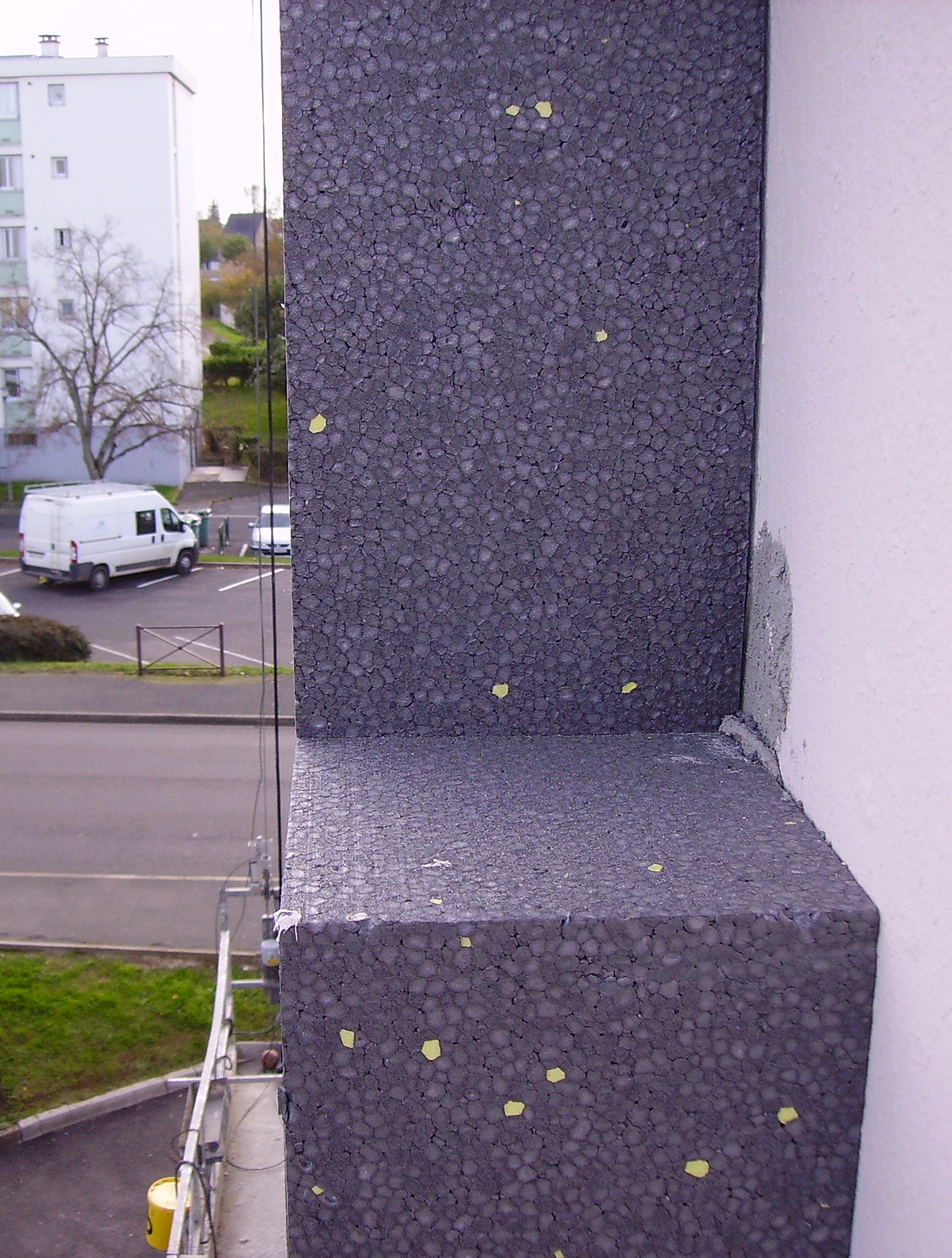
EPS is produced by expanding polystyrene beads with a blowing agent (typically pentane). The beads are steam-expanded within a mould, creating a closed-cell foam board with a characteristic granular appearance at cut edges. Standard EPS has a relatively open inter-bead pore structure that allows slow moisture migration.
Densities for construction-grade EPS typically range from 12 to 30 kg/m³, with different grades designated by their compressive stress at 10% deformation (CS). EPS 100 (CS ≥ 100 kPa) is typical for facade applications; EPS 200 is used for ground floor and underfloor applications requiring higher compressive resistance.
XPS — Extruded Polystyrene
XPS is produced by extruding molten polystyrene through a die, creating a uniform closed-cell structure with no inter-bead boundaries. The resulting material has a smooth skin and a more homogeneous cellular structure than EPS, which gives it substantially better resistance to moisture absorption and higher compressive strength at equivalent density.
XPS densities typically range from 25 to 45 kg/m³, with declared compressive stress values from 150 to 700 kPa depending on grade. Standard XPS for ground applications typically carries CS 200–300 kPa ratings.
Thermal Conductivity Comparison
Graphite EPS
Graphite-enhanced EPS (commonly marketed under trade names such as Neopor by BASF) incorporates graphite particles into the bead structure. The graphite acts as a radiation reflector within the cellular structure, reducing radiative heat transfer and bringing declared conductivity values to 0.031–0.033 W/(m·K) — comparable to standard XPS. Graphite EPS has expanded its market share in Poland since the tightening of WT requirements in 2021, as it allows thinner insulation layers for the same thermal resistance without moving to a significantly more expensive product.
Moisture Performance
The most significant practical difference between EPS and XPS is their behaviour in moisture-exposed conditions. EPS absorbs water gradually through inter-bead capillaries when in sustained contact with liquid water or high relative humidity. As water replaces trapped air in the pore structure, thermal conductivity increases and insulating performance degrades.
XPS, owing to its uniform closed-cell structure, has very low water absorption. European standard EN 12087 specifies test methods for water absorption by total immersion and by diffusion; XPS products typically show long-term water absorption of less than 1–3% by volume, compared to 3–10% for EPS products under comparable conditions.
In practice, this difference matters most in the following positions:
- Insulation below ground level (basement walls and foundation slabs)
- Inverted flat roofs where the membrane lies below the insulation layer
- Ground floor slab insulation in direct contact with substrate
- Exterior perimeter insulation in regions with significant freeze-thaw cycling
For standard above-grade ETICS facade applications, where the insulation is protected from bulk water by a render system, EPS performs adequately and the cost advantage over XPS is substantial.
Fire Classification
Both EPS and XPS without additional fire retardants are combustible materials. Construction-grade EPS in Poland typically carries Euroclass E classification under EN 13501-1 — meaning it is capable of self-extinguishing but will burn and produce smoke when exposed to significant flame. Some products with additional flame retardant treatment are classified at higher levels (B-s1, d0 or similar), though this must be verified against specific product declarations.
The combustibility of polystyrene insulation is a factor that affects specification decisions in buildings subject to fire regulations prescribing non-combustible insulation — particularly buildings over 25 metres in height. In such cases, mineral wool (see the mineral wool overview) is generally specified instead of EPS or XPS on external facades.
Compressive Strength
For applications where the insulation bears loads — ground floor slabs, inverted roofs, parking decks — compressive strength (or compressive stress at 10% deformation) is a key parameter. XPS is generally available in higher compressive grades and is specified where loads exceed the capacity of EPS options. High-density EPS (EPS 200, EPS 250) is used where moderate compressive resistance is required without the cost of XPS.
Application Summary
| Application | Typical Choice | Notes |
|---|---|---|
| External wall ETICS (above ground) | EPS standard or graphite | Most common in Poland; cost-effective, adequate moisture protection under render |
| Ground floor slab | EPS 200 or XPS | Compressive resistance required; XPS where groundwater risk is present |
| Basement exterior below grade | XPS | Direct soil contact; moisture resistance is the primary consideration |
| Flat roof (warm roof) | EPS 150–200 or XPS | Vapour control layer detailing is critical regardless of material |
| Inverted flat roof | XPS | Insulation sits above waterproofing and is exposed to drainage water |
For positions where neither EPS nor XPS provides sufficient performance — particularly in complex geometry, hard-to-reach areas, or where maximum thermal resistance per millimetre is required — see the overview of spray polyurethane foam.